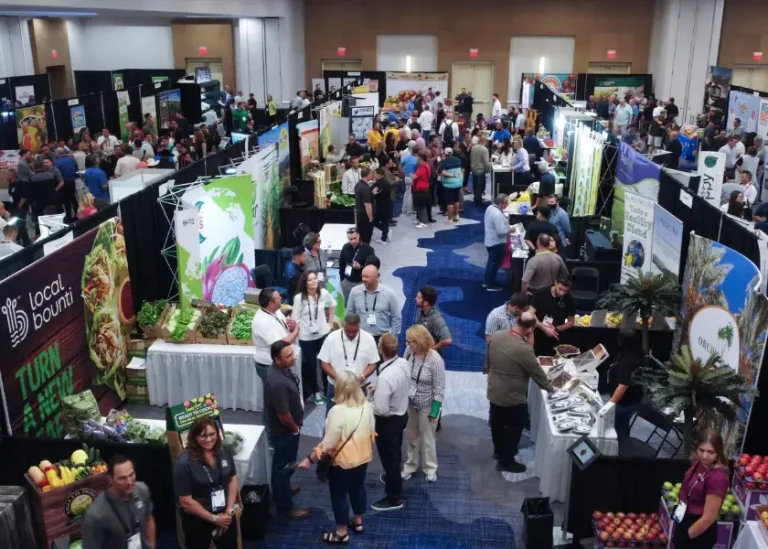
As your company’s next big event draws closer (gosh, has it been a year already?), the marketing department gears up to increase attendance and conversations by employing a variety of tactics, usually ranging from direct emails to digital ads on industry-related websites. These events are vital for communicating with your audience and for generating leads. Whether your company is the event’s host, a sponsor, or a booth vendor, you want people at the show to get your message.
Events also provide an important means of reaching the audience directly because, well, you know that some of the people you want to reach will be there — all in the same place. That’s why programmatic geofencing has become such a popular tactic in recent years. It’s a proven way to hyper-target attendees within a geographic area — in this case, the area in and around an event’s location.
The advantages of using this tactic are easy to see. Based on the focus of the show, you have a clear idea of who is attending. The MILK Business Conference, for example, draws commercial dairy farmers. Farmers raising beef or growing wheat probably won’t be there. Because you know who’s attending the event, you can be hyper relevant and timely with your ad messages.
Through a programmatic geofencing tactic, you can speak directly to the needs of those business-savvy dairy farmers attending the Conference. Some marketers do wonder, however, how they can prevent reaching non-prospects in the geofence area with ads that could seem annoyingly irrelevant, which is not a good look for the brand or a good way to spend the marketing budget.
Reach ONLY the Right People
Given the nature of geofencing campaigns, you can’t completely avoid serving some ads to the wrong folks, and there’s even a certain advantage to catching any farmers who may not be in your data base. For our clients at Farm Journal, we run non-first party geofences but also add another layer to the tactic: we target using first-party farmer data at the show.
Using this data segment, you can target commodity groups likely to attend the event (dairy farmers at MILK Business Conference, for example) within your tightly circumscribed area. It could be within a small circle surrounding the event’s location. The first-party data layer limits the chance of reaching non-prospects who happen to be in the vicinity.
You can also use the layering approach to widen your circle. By targeting only the first-party audience segment based on your data, you can extend your radius to 15 miles, and even 30 miles, which allows you to reach the right prospects as they travel to and from the event’s location. You can catch them as they eat at a nearby restaurant or walk to their hotel.
In this way, first-party data layering maximizes your ability to reach the right people and increases the overall performance of your geofence campaign.
Real Results
We’re firm believers in first-party data layering because we’ve seen it work in quite a few geofence campaigns for our ag-industry clients. Here are some CTR percentage metrics from recent events to demonstrate the effectiveness of the approach. (The industry CTA benchmark for geofence display ads is around 0.5%)
National Farm Machinery Show — 1.40%
Texas A&M Beef Cattle Short Course — 1.38%
National Cattlemen’s Beef Association Conference — 1.02%
World Dairy Expo — 1.23%
World Pork Expo — 0.72%
Commodity Classic — 0.78%
As you can see, the benchmark was surpassed at every event. In most cases, it was more than doubled. As you plan your next industry conventions and events, refine your geofence approach to ensure you’re reaching as many of the right people — and as few of the wrong ones — as possible.