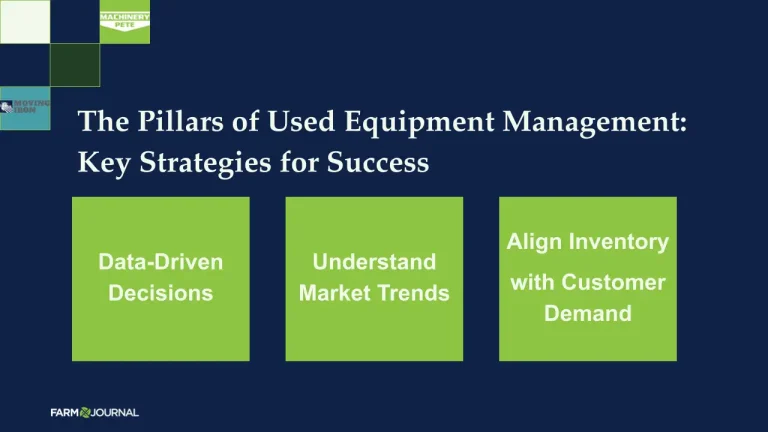
Here’s a look at key strategies:
Data-Driven Decisions and Market Awareness
One of the first and most important lessons for UEMs is the ability to recognize and respond to market trends. Auction results, new equipment sales shifts and other factors all play a major role in determining demand for used inventory.
To succeed, UEMs must take a data-driven approach, making decisions based on facts, not emotions. Personal attachment to a piece of equipment, for example, can cause hesitation in lowering a price even when the data clearly shows it’s necessary. Using objective sources like auction prices, retail listings and sales history helps managers make informed, market-aligned decisions.
Adaptability is also critical. As technology, consumer behavior and the economy shift, UEMs must stay flexible, quickly adjusting inventory and pricing strategies to maintain a competitive edge.
Aligning Inventory with Customer Demand
Balancing the Sales Mix
A healthy balance between new and used equipment sales supports profitability. Overemphasizing one side can result in inventory or cash flow problems. UEMs must monitor the sales mix carefully, ensuring trade-ins from new sales are moved efficiently without overwhelming the lot.
Improving Equipment Turnover
Equipment turnover, the speed at which used inventory is sold, is a key metric. Faster sales mean better cash flow and less depreciation. Identifying which equipment moves quickest and streamlining reconditioning processes keeps inventory fresh and responsive to demand.
Leveraging Technology
Smart dealerships rely on inventory management systems and customer relationship management (CRM) tools to monitor stock levels, track customer behavior and guide smarter buying and selling decisions. Technology helps personalize customer interactions and keeps dealerships proactive rather than reactive.
Building Strong Customer Relationships
Understanding customer needs and tailoring the sales approach builds loyalty and encourages repeat business. Whether working with first-time buyers who need more guidance or seasoned customers who prefer quick transactions, strong relationships are key to long-term success.
Setting Your Dealership up for Success
Mastering used equipment management takes more than just moving machines. It requires market insight, inventory discipline, technology adoption and a customer-first mindset. Dealerships that focus on these pillars will be better positioned to succeed in the ever-evolving equipment market. To learn more ways to chase success attend Moving Iron Summit September 24 – 26, 2025 in Austin, Texas.